


Resource Therapy
Because sometimes, different parts of us want different things.
A gentle way to understand the parts of yourself that feel anxious, overwhelmed, critical or stuck.
Have you ever felt like part of you knows what you need, but another part keeps getting in the way?
Maybe part of you wants to set boundaries, but another feels guilty for disappointing people.
Part of you knows you're capable, but another constantly questions whether you're good enough.
Or perhaps you know something is in the past, yet certain situations still bring up feelings that seem bigger than the moment itself.
It can be frustrating when you know something logically, but how you feel or respond tells a different story.
And sometimes, understanding why you feel that way is only part of the picture.

What is Resource Therapy (RT)?
We all have different parts of ourselves.
Sometimes we feel confident, capable and able to manage whatever life throws at us. Other times, fear, sadness, self-doubt or familiar patterns can take over.
Resource Therapy is a trauma-informed, strengths-based approach to psychotherapy that recognises these different parts of our personality, known as Resource States.
Some parts hold our strengths, courage, compassion and resilience. Others may carry difficult emotions, unmet needs or ways of coping that made sense at one point in our lives but aren't necessarily helping us now.
Rather than seeing a difficult reaction as who you are, Resource Therapy helps us become curious about the part of you that's struggling.
What has that part experienced? Why might it respond the way it does? And what might it need now?
Resource Therapy goes beyond simply understanding our parts. It's a structured therapeutic approach that allows us to work directly with parts experiencing distress, while also recognising and drawing on the strengths and resources we already have.
Because there's so much more to you than the part that's struggling.
When you understand the pattern, but still can't seem to change it.
Sometimes we can understand something logically, but that doesn't necessarily change how we feel or respond.
You might know you don't need everyone's approval, yet still find yourself saying yes when you really want to say no.
You might recognise that you're being hard on yourself, but that critical voice doesn't seem to quieten.
Or perhaps you know something is in the past, yet certain situations still bring up feelings or reactions that seem bigger than what's happening in the moment.
It can be frustrating when you know something intellectually, but another part of you seems to have a different idea.
Resource Therapy offers a way to explore what's happening beneath those reactions, working with the parts of you that may be carrying unresolved emotions, experiences or beliefs.
Rather than simply trying to change how you think or behave, we can begin to understand why a particular part responds the way it does and help it find a different way forward.

How does RT work?
Resource Therapy is more than simply recognising that we have different parts of ourselves. It's a therapeutic theory and structured treatment model, with 15 treatment actions that guide how we work with different Resource States.
Rather than only talking about a difficult feeling or reaction, Resource Therapy allows us to work directly with the part of you that's experiencing distress.
For example, you might recognise that you often put other people's needs ahead of your own. You know you'd like to set boundaries, but the guilt or fear of disappointing someone can feel overwhelming.
Through Resource Therapy, we can explore the part of you that feels responsible for keeping everyone happy, understand where that response may have come from, and work towards helping that part feel safer and respond differently.
The aim isn't to get rid of parts of yourself or force them to change. It's to understand what they need, address what's been holding them back and help you access more of the strengths and resources already within you.
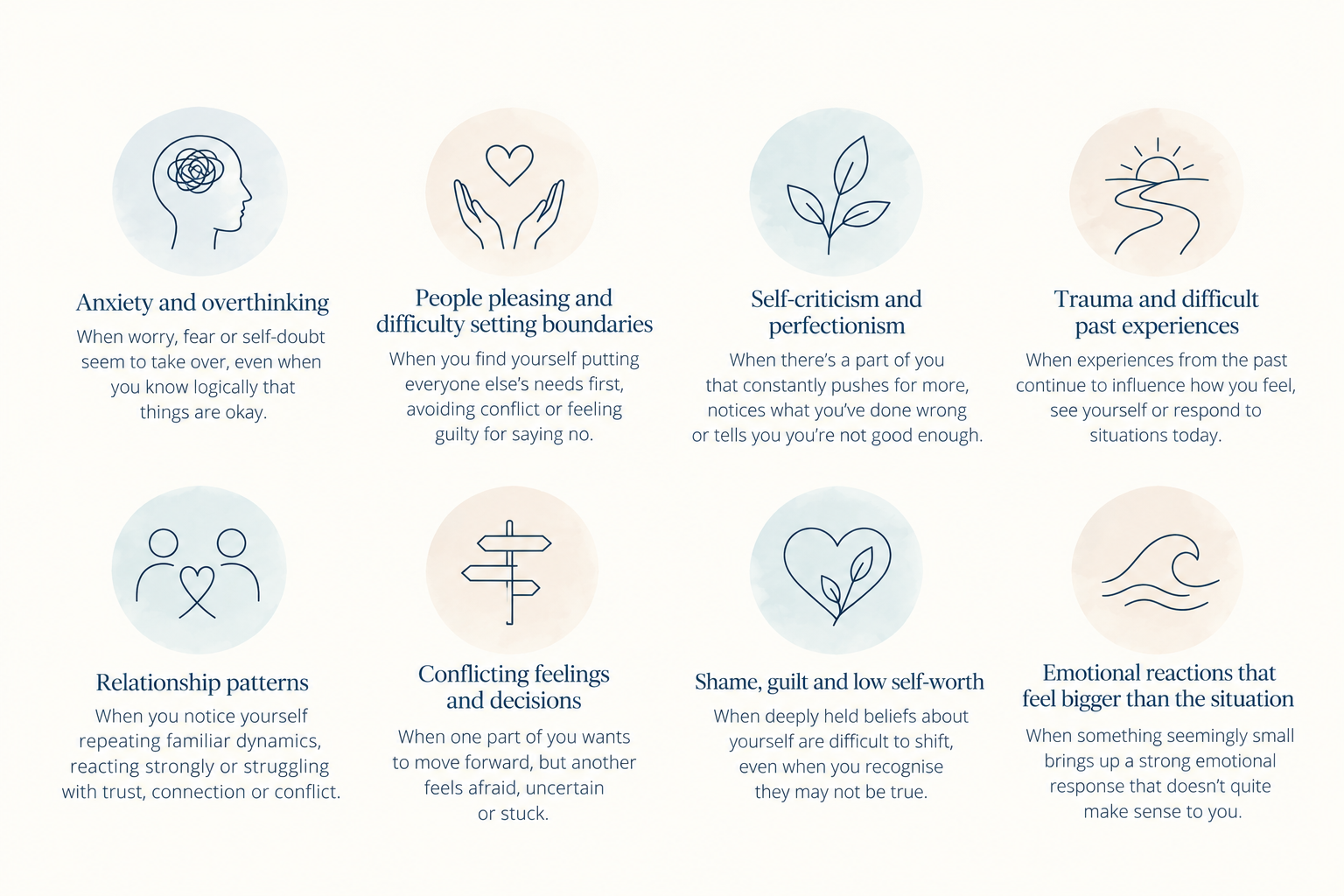
How can Resource Therapy help you?

What can you expect in a Resource Therapy session?
You don't need to know anything about Resource Therapy or be able to identify your different parts before coming to a session.
And you certainly don't need to have everything figured out.
We'll start by exploring what's been happening for you, what you'd like to feel or do differently, and what you hope to get out of therapy.
From there, I may guide you to notice and connect with a particular part of yourself that's experiencing distress or contributing to a pattern you'd like to change.
We might explore what that part is feeling, what it has experienced and what it needs, while also drawing on the strengths and resources you already have.
Resource Therapy involves more than talking about our experiences. Depending on your needs, we may use specific therapeutic techniques to help parts process difficult emotions, address unresolved experiences and develop different ways of responding.
My approach is warm, collaborative and trauma-informed. There's no pressure to share more than you're ready to, and we'll work at a pace that respects your needs.

As a Clinical Resource Therapist, I'm proud to be part of the Resource Therapy Training Australia community.
You can find me on the Resource Therapy Training Australia directory
Resource Therapy and EMDR
As a PACFA Registered Clinical Counsellor, Accredited EMDR Practitioner and Clinical Resource Therapist, I draw on both approaches in my work with clients.
While EMDR helps us process distressing memories and experiences that continue to affect us, Resource Therapy allows us to work more directly with the parts of ourselves that may be holding those experiences, emotions or beliefs.
These approaches can complement each other, particularly when working with trauma, longstanding patterns, difficult emotions and beliefs about ourselves.
For some people, Resource Therapy may be a helpful way to build understanding, safety and internal support before EMDR processing. For others, it may be used alongside EMDR or as a therapeutic approach in its own right.
We don't need to decide on a particular approach before we meet. We'll explore what has brought you to therapy, what you'd like support with, and what feels most appropriate for you.